Every facility has its own specific characteristics. However, many challenges related to organising vehicle traffic repeat themselves regardless of the industry. Through conversations with clients and the implementation of subsequent projects, we see several problems that occur particularly often.
Challenges in managing vehicle arrivals and facility traffic
Accumulation of vehicles at one time
When too many trucks arrive at once, queues quickly begin to form. In extreme cases, vehicles start blocking public roads, affecting not only the operation of the facility, but also the comfort of residents in the surrounding area. That is why effective planning of deliveries and pickups, as well as proper traffic management within the facility, is becoming increasingly important.
Lack of notification tools
Despite ongoing digitalisation, many companies still organise vehicle arrivals using emails, phone calls or spreadsheets. As the number of operations grows, this approach makes it more difficult to predict dock occupancy and use resources efficiently.
Limited operational space
Facilities without their own parking areas for waiting vehicles face a particular challenge. In such cases, the smoothness of loading and unloading processes becomes crucial, as every delay can cause congestion outside the company premises.
Efficient communication with carriers
Even the best-prepared schedule will not work without effective communication between the facility and drivers. It is important that carriers receive clear information about time slots, statuses and loading or unloading locations. In practice, this can be supported both by digital tools and by on-site infrastructure, such as Variable Message Signs (VMS), which guide drivers to the appropriate docks.

The potential of ITS technologies within industrial facilities is still underused
There is still limited awareness that solutions associated with Intelligent Transportation Systems – used for years in urban and road traffic management, can also effectively support the organisation of traffic in manoeuvring areas, parking zones and logistics spaces within enterprises.
This is where we see significant potential for optimisation.
By combining FlowYard with our experience in designing and implementing ITS systems, we help clients not only introduce a vehicle scheduling tool, but also comprehensively organise vehicle traffic within their facilities.
Examples of ITS technologies used in industrial environments include:
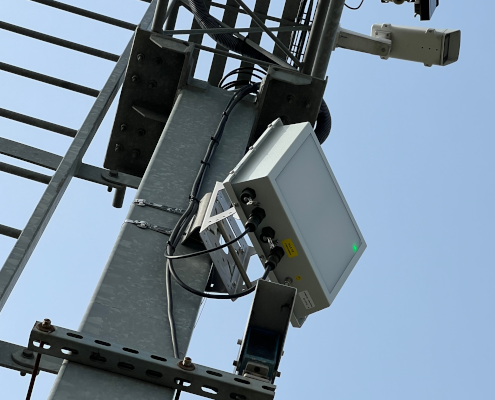
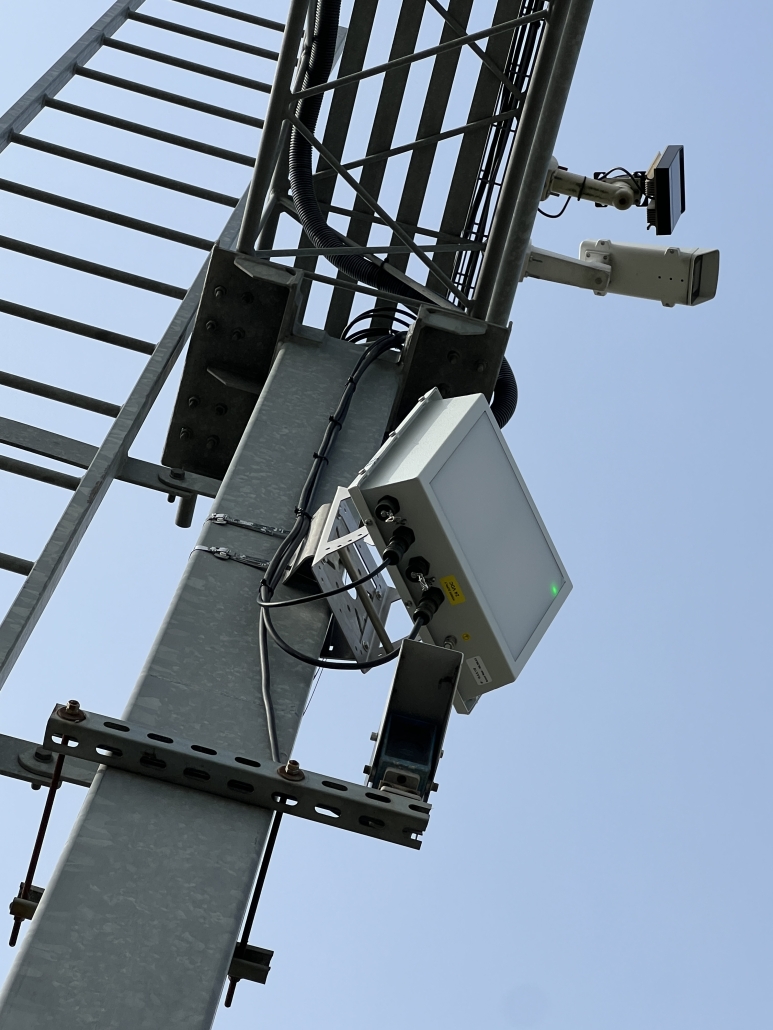
- ANPR cameras, which enable automatic vehicle identification at entry and exit points, as well as at key locations within internal infrastructure. This makes it possible to automatically record the time a vehicle spends at a car wash, fuel station, workshop or other operational zones.
- AID cameras – Automatic Incident Detection, which improve safety by automatically detecting events such as vehicles stopping in prohibited areas, driving against the permitted direction, dangerous manoeuvres or other situations requiring operator response.
- Speed measurement devices, which support the enforcement of traffic rules within the facility, reducing the risk of collisions and improving the safety of employees and drivers.
- Low-speed weigh-in-motion systems, which allow automatic vehicle weight measurement without the need to stop traffic, improving logistics processes and cargo control.
- Video monitoring systems, which provide a real-time overview of the situation in manoeuvring areas, support incident analysis and enable more effective operational management.
However, the greatest value does not come from a single device, but from integrating all these elements within one platform for traffic and logistics operations management. This gives users a complete picture of the situation within the facility, access to real-time data and the ability to make faster and better operational decisions. It is precisely the combination of APM PRO’s ITS experience and the capabilities of FlowYard that makes it possible to create comprehensive solutions tailored to the real needs of manufacturing facilities and logistics centres.

A project-based approach as the most effective solution
This is one of the most important conclusions.
Every facility operates in different conditions, has its own processes and limitations. That is why effective vehicle traffic management requires an individual approach, and the implemented solutions should be adapted to the specific needs of each organisation.
This is why FlowYard is not just a vehicle scheduling system.
It is a tool that we adapt to the client’s actual logistics processes, helping to organise vehicle traffic, improve communication and increase the smoothness of operations.